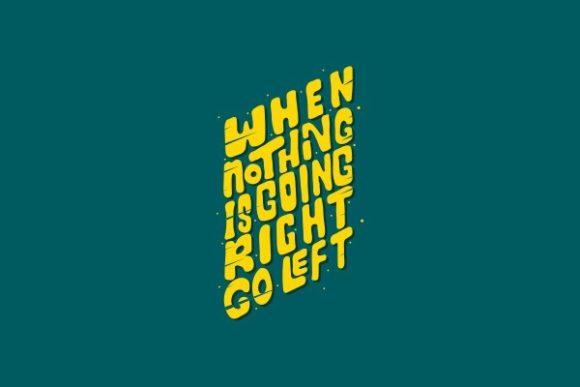
When Nothing Is Going Right Go Left
As a designer who spends more time staring at stitch density charts and fabric swatches than actually sleeping, I have developed a certain level of skepticism when it comes to new digital assets. The market is flooded with clip art that looks beautiful on a screen but turns into a tangled mess of thread once it hits the hoop. That is why I approach every machine embroidery design with a critical eye, testing not just for aesthetics, but for structural integrity and market viability. Recently, I put the When Nothing is Going Right Go Left design through its paces. This inspirational quote hand lettering design is marketed as a versatile asset for various projects, including t-shirts, wall art, stickers, and more. But does it hold up in the real world of handmade commerce?
First Impressions: Mood and Visual Personality
The moment you open the file, the first thing that strikes you is the attitude. The phrase "When nothing is going right go left" carries a specific kind of resilience—it is witty, slightly rebellious, and deeply relatable. In terms of visual personality, this isn’t your typical stiff corporate logo or a delicate floral monogram. It has an organic, hand-lettered flow that suggests movement. For a crafter or small business owner, this mood is gold. It fits perfectly into the current trend of "authentic" branding where imperfection is celebrated.
The layout feels balanced, with the text curving in a way that guides the eye naturally across the design. It doesn’t scream for attention; rather, it invites the viewer to read along. This subtlety is crucial for high-end custom apparel. If you are creating boutique items for Etsy sellers or craft fair products, you want designs that feel curated, not mass-produced. This design achieves that balance. It creates a mood of supportive humor, making it an ideal candidate for personalized gifts that double as statement pieces.
Real-World Application: From Screen to Stitch
I took this embroidery file out of the digital realm and onto actual fabric to see how it translates. My primary test case was a heavy cotton canvas tote bag design project. Why? Because tote bags are a staple for any craft business, but they also expose flaws in digitizing immediately. The fabric is unforgiving.
The hand-lettering style of When Nothing is Going Right Go Left relies heavily on clean lines. On the tote bag, the contrast between the dark fabric and the bright thread colors made the message pop. However, I noticed that the curves required a steady hand during hooping. If the tension is off, those flowing letters can distort. Once stabilized correctly, the result was crisp. The design works exceptionally well for sweatshirt embroidery as well, particularly on the chest area or centered on the back. The inspirational nature of the quote pairs beautifully with the cozy, textured look of fleece or french terry.
I also experimented with using this design for baby embroidery projects. While the font is playful, it is legible enough for nursery decor or onesies. It adds a touch of modern wit to traditional baby items, which appeals to millennial parents looking for unique personalized gifts. Furthermore, the versatility mentioned in the product description holds true. I successfully mocked up this design as an embroidered patch for denim jackets, proving its adaptability beyond standard flat surfaces.
Where Caution Is Required
No design is without its limitations, and being honest about them saves you from unhappy customers. There are specific scenarios where When Nothing is Going Right Go Left needs careful handling:
- Small Hoop Sizes: If you attempt to digitize this into a very small hoop size (under 3x3 inches), the intricate details of the hand-lettering may become muddy. The individual strokes might merge together, losing the "hand-drawn" charm and looking like a blob of thread. Always preview the design at its smallest intended scale.
- Textured and Stretchy Fabrics: As noted with the tote bag, texture is the enemy of fine detail. On chunky knits or highly textured wools, the definition of the letters will soften significantly. Similarly, on stretchy fabrics like jersey knit without proper stabilizer, the design may pucker. This is critical to consider if you are targeting the apparel decorator market.
- Dense Stitch Areas: Depending on the specific digitization, some parts of the lettering may use fill stitches. If the stitch density is too high for thin fabrics like silk or lightweight polyester, the fabric may show through the stitching, reducing the perceived quality of the finished product.
- Curved Surfaces: While great for flat panels, applying this to curved surfaces like caps requires precise mapping. The natural curve of the text might clash with the curvature of a baseball cap unless the design is specifically adjusted for 3D structures.
Impact on Brand Value and Customer Trust
In the world of Etsy listings and small shop products, presentation is everything. A poorly executed embroidery job can kill trust instantly. However, when When Nothing is Going Right Go Left is stitched correctly, it elevates the brand. It signals that the seller understands typography and emotional resonance. Customers are more likely to engage with a product that feels personal and thoughtful.
This design enhances brand consistency for creators who focus on motivational or lifestyle niches. Whether you are selling digital product previews or physical goods, the consistent use of strong, clear messaging helps build recognition. It transforms a simple item—like a kitchen towel or a pillow cover—into a piece of decor with a message. This increases the perceived value, allowing you to price your items higher because you are selling an experience, not just a commodity.
Practical Designer Notes for Execution
To ensure your embroidery project is a success, follow these practical steps before running large batches:
- Test on Scrap Fabric: Never run a full production batch on expensive material. Use scraps of the exact fabric type you plan to sell. Check how the thread colors interact with the fabric hue.
- Check Stitch Density: Zoom in on the design. Are there areas where the needle penetrates the same spot too many times? This can cause thread breakage or fabric damage. Adjust the settings if necessary.
- Review Stabilizer Choice: The choice of stabilizer is just as important as the design itself. For woven fabrics, cut-away stabilizer is usually best for durability. For knits, tear-away or water-soluble options might be preferred depending on the final hand-feel.
- Inspect Small Details: Look closely at the ends of the letters and any decorative accents. Ensure they are clean and do not have loose threads that could unravel after washing.
- Black and White Mockups: Convert your design to black and white to check contrast. If the design loses impact without color, it may rely too heavily on color blocking rather than shape.
- Confirm Licensing: Before listing this as a commercial embroidery item, double-check the license agreement. Some digital embroidery files allow personal use only, while others permit commercial sales of finished goods. Clarity here protects your business.
Final Verdict
When Nothing is Going Right Go Left is a robust, emotionally resonant addition to any designer’s library. It bridges the gap between whimsical and professional, making it suitable for a wide range of applications—from holiday embroidery gifts to serious business merchandise. By respecting its technical requirements and understanding its visual strengths, you can create handmade products that stand out in a crowded marketplace. It is not just a quote; it is a conversation starter, stitched into fabric.