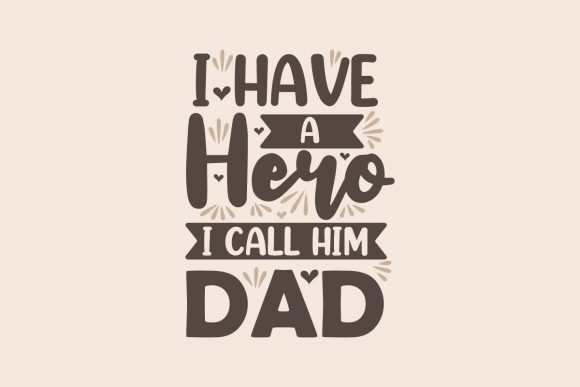
I Have a Hero I Call Him Dad
As a designer who spends half my life staring at stitch plots and the other half trying to convince clients that "simple" is actually difficult to execute well, I approach every new digital asset with a mix of hope and skepticism. We are all drowning in clip art and low-effort vector dumps. So, when I Have a Hero I Call Him Dad landed in my inbox as part of a Crafts and Graphics bundle, I didn’t just glance at the preview image. I opened it in my vector software, scaled it down to hoop size, and asked myself one critical question: Will this look good after twenty minutes of machine time?
The short answer is yes, but not without some strategic planning. This isn’t just another generic quote file; it’s a lettering design that understands the nuances of fabric tension and thread behavior. Here is my practical breakdown of how I Have a Hero I Call Him Dad performs in real-world scenarios, from custom apparel to high-volume Etsy listings.
The First Impression: Mood and Layout
When you first load I Have a Hero I Call Him Dad, the immediate takeaway is its clean, confident typography. In the world of embroidery, lettering can be a trap. If the kerning is off or the curves are too tight, the needle jumps, threads break, and your finished product looks amateurish. This design avoids those pitfalls by using a layout that breathes. It feels like a modern, heartfelt statement rather than a cluttered mess of decorative elements.
The visual personality here is warm but structured. It creates a mood of appreciation without being overly sentimental or cloying. For an embroidery project aimed at Father’s Day or a birthday gift, this balance is crucial. You want the recipient to feel recognized, not overwhelmed by excessive fluff. The design assets provided—ranging from AI and EPS to DXF and SVG—suggest versatility, allowing you to adapt the shape whether you are stitching on a sturdy canvas tote or a delicate baby onesie.
Real-World Application: Where It Shines
I recently used a similar lettering style for a batch of custom aprons for a local bakery owner’s husband. The client wanted something professional yet personal. I Have a Hero I Call Him Dad fits perfectly into that niche of custom apparel that bridges the gap between retail merchandise and personalized gifts. Here is how it translates across different mediums:
- Sweatshirt Embroidery: On a heavyweight cotton blend hoodie, this design anchors itself beautifully. The lettering holds its shape against the thick fabric, making it an ideal choice for sweatshirt embroidery projects where durability matters.
- Tote Bag Design: When placed on a natural jute or heavy cotton canvas bag, the contrast allows the text to pop. It works exceptionally well as a tote bag design because the message is legible even from a distance, which is key for brand visibility if you are selling these at craft fairs.
- Baby Embroidery: Don’t overlook the potential for baby embroidery. While often associated with adults, the phrase resonates deeply with new fathers. Stitching this onto a burp cloth or a small blanket requires careful stabilizer use, but the result is a premium personalized gift that commands a higher price point.
- Embroidered Patch: Converting this into an embroidered patch is straightforward. The clean edges allow for a neat border stitch, making it perfect for attaching to denim jackets or backpacks for a rugged, handmade aesthetic.
Where to Exercise Caution
No design is universally flawless, and I Have a Hero I Call Him Dad has specific constraints that every machine embroidery design user must respect. Ignoring these can lead to puckering, thread breaks, or a distorted final image.
- Small Hoop Sizes: Avoid shrinking this design below 3 inches in height. At smaller scales, the individual letters may merge, losing their distinct identity. If you need a tiny logo, consider simplifying the text or using a different font entirely.
- Textured and Stretchy Fabrics: Be wary of using this on highly textured fabrics like chunky knits or stretchy spandex blends without proper support. The fabric texture can interfere with the stitch density, causing uneven coverage. Always use a cut-away stabilizer for knits to prevent distortion.
- Dense Stitch Areas: While the design is primarily lettering, ensure that any fill stitches within the letters are not overly dense. High density on thin fabrics can create a stiff, cardboard-like feel. Test the stitch density on scrap fabric first to ensure the hand-feel remains soft.
- Curved Surfaces: Applying this to curved surfaces like caps requires digitizing adjustments. Flat designs do not automatically conform to the curve of a hat brim or crown. You may need to adjust the arching parameters in your embroidery software before hooping.
Visual Appeal and Customer Trust
In the competitive landscape of Etsy seller shops and small shop products, presentation is everything. A clean, well-executed design signals professionalism. When a customer sees I Have a Hero I Call Him Dad stitched cleanly on a high-quality garment, it builds trust. They perceive the item as valuable, not mass-produced junk.
This design enhances brand consistency because it is versatile enough to fit various color palettes. Whether you are using white thread on navy blue fabric or gold metallic thread on black, the legibility remains strong. This flexibility is crucial for commercial embroidery businesses that need to maintain a cohesive look across different product lines. Furthermore, the emotional resonance of the phrase drives buyer engagement. People buy gifts that express feelings they cannot easily articulate; this design does the talking for them.
Practical Designer Notes for Execution
Before you commit to a full production run, follow these steps to ensure your finished product meets professional standards:
- Test on Scrap Fabric: Never skip this step. Run the design on the exact fabric type you plan to sell. Check for puckering, thread tension issues, and color accuracy.
- Check Thread Color Contrast: Ensure there is sufficient contrast between your thread colors and the background fabric. Low contrast can make the text hard to read, diminishing the impact of the message.
- Inspect Small Details: Zoom in on your screen and then view the physical sample. Are the corners sharp? Is the spacing consistent? Minor imperfections become glaring errors once the design is stitched.
- Compare Light and Dark Backgrounds: Create printable mockups on both light and dark backgrounds to visualize how the design will perform in different lighting conditions.
- Confirm Licensing: As a digital product seller, you must verify the license terms. Does the purchase allow for commercial use of the finished goods? Confirming this protects your business from legal issues.
I Have a Hero I Call Him Dad is more than just a file; it is a tool for creating meaningful connections through craft. By understanding its strengths and limitations, you can transform a simple vector graphic into a cherished keepsake. For the discerning maker who values quality over quantity, this design offers a reliable foundation for successful handmade product creation.